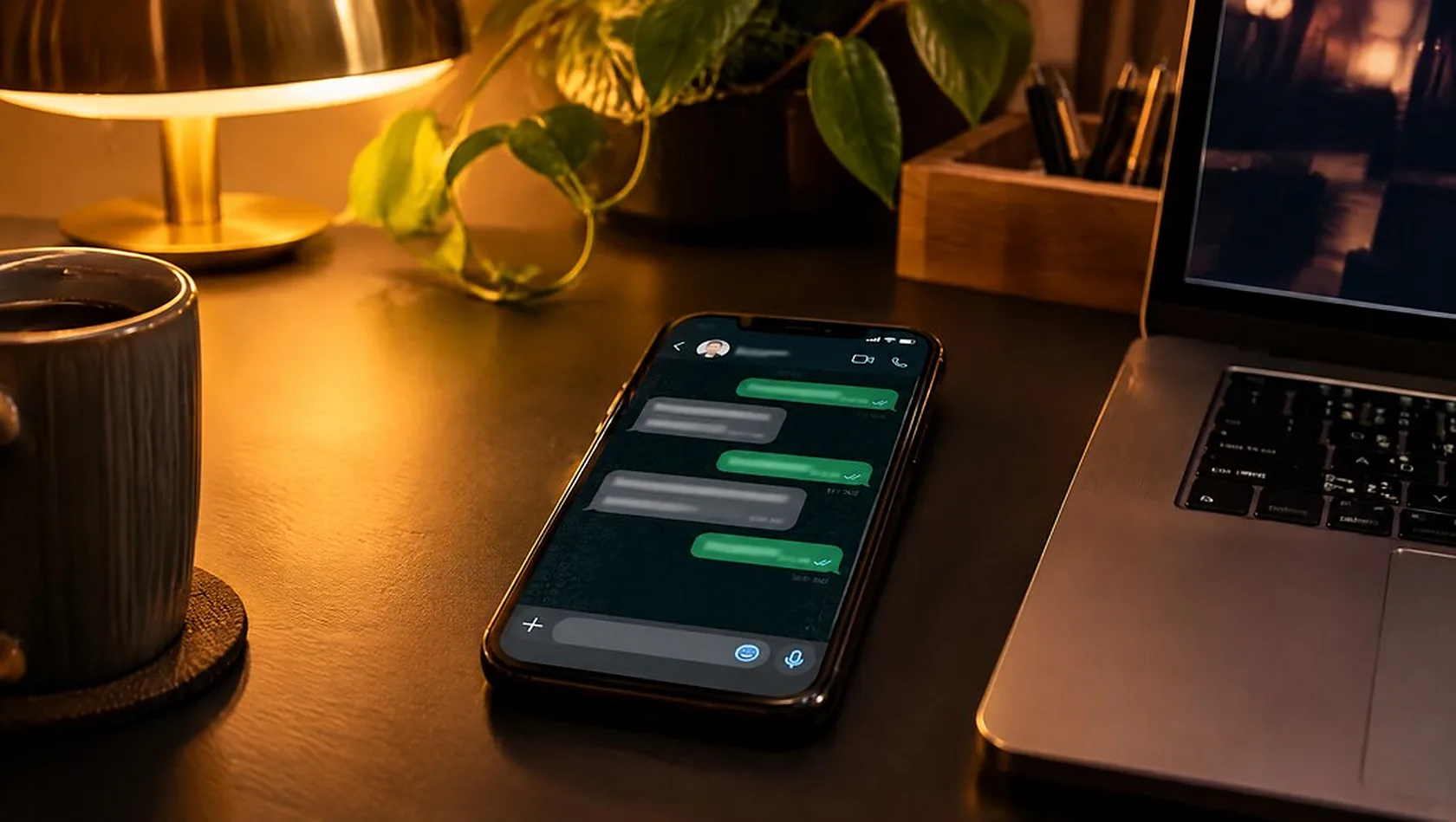
Short answer: an AI agent on WhatsApp answers leads in seconds, asks the qualifying questions, clears up doubts based on what you taught it and books the conversation with a salesperson. It works well when it has clear rules, a reviewed knowledge base, a connection to the CRM and a fast path to hand the conversation to a person. Without that, it becomes a bot that annoys people and loses sales.
In this article
- Why response speed matters so much
- What an AI agent is and how it differs from a menu chatbot
- What the agent should and should not do
- How to build it: the seven parts of an agent that works
- Example of a well-handled conversation
- How to measure whether the agent helps or hurts
- Frequently asked questions
A lead that waits goes cold
Someone who clicks an ad and sends a message has the topic on their mind at that moment. If the reply comes two hours later, they have already talked to a competitor, gone back to work or simply lost interest. In almost every sales operation we audit, first response time is one of the factors that hurts the close rate the most, especially at night, on weekends and at peak hours.
Hiring more people to reply fast around the clock is expensive and does not always solve it, because many first messages are repeated questions: price, opening hours, address, whether you serve their area. That is exactly the work an AI agent does well.
An AI agent is not a menu chatbot
The old chatbot works with buttons and menus: "type 1 for a quote, 2 for support". It is predictable, but rigid. When the customer writes something outside the script, the conversation gets stuck.
An AI agent uses a language model to understand what the person wrote, even with typos, transcribed voice notes or several questions in the same message. It replies in natural language, following the instructions and knowledge base you defined, and it can take actions: create the contact in the CRM, fill in fields, book a meeting on the calendar, call in a human.
| Menu chatbot | AI agent | |
|---|---|---|
| Understands free text | No | Yes |
| Answers varied questions | Only those in the menu | Those covered by the knowledge base |
| Qualifies the lead | With fixed questions | With questions adapted to the conversation |
| Books meetings | With a generic link | Offers real calendar slots |
| Main risk | Customer gives up in the menu | Saying something wrong if it has no rules |
What the agent should do
- Reply right away, at any hour, in a tone similar to your team's.
- Understand what the person needs and ask the questions your salesperson would: what they are looking for, by when, in which area, what budget range.
- Answer frequent questions based on information you approved: services, service area, timelines, payment options.
- Book the conversation with a salesperson on the real calendar, offering time options instead of sending a link and hoping.
- Record everything in the CRM: contact details, qualification answers, ad source and a summary of the conversation.
- Hand off to a person when the lead asks, when the question goes beyond what it knows or when the conversation heats up.
What the agent should not do
- Make up prices, timelines or terms. If the information is not in the knowledge base, it says it will confirm with the team.
- Close deals on its own in complex or high-ticket sales. Its job is to prepare the sale, not replace the salesperson.
- Push endlessly. Follow-up has limits and intervals. Repeated messages in a row damage the number's reputation and can lead to a block.
- Pretend to be human when asked. Transparency avoids friction and is the safest path.
- Ask for sensitive data that is not needed for the service.
The seven parts of an agent that works
1. Number and official API
To operate safely, the agent should run on the official WhatsApp Business API, through an approved provider or a CRM that already has that integration. Solutions that emulate WhatsApp Web on a phone tend to be unstable and increase the risk of the number being blocked.
2. Clear instructions
This is the agent's "code of conduct": who it represents, its tone of voice, the goal of the conversation, what to ask, in what order and when to call someone. Vague instructions produce vague answers. Write them as if you were training a new rep on their first day.
3. A reviewed knowledge base
Services, frequently asked questions, service area, policies, differentiators. This base needs to be short, up to date and approved by someone in the business. Outdated information in the base becomes a wrong answer to a customer.
4. Qualification criteria
Define what a good lead is for you. A useful model is to ask about need, timeline, location and ability to invest. With those answers, the agent knows whether to book, route to another product or simply record and thank.
5. Connection to the CRM and calendar
Without a CRM, the agent's conversation floats loose. With a CRM, every lead goes into the right pipeline, with the ad source, the answers and the next step. An integrated calendar lets it book real time slots and send reminders before the meeting.
6. Human handoff rules
List the triggers: the lead asked to speak to a person, complained, asked something outside the base, showed they are ready to buy. In those cases, the agent says it will bring someone in, pauses and notifies the salesperson with a summary of the conversation.
7. Weekly conversation review
In the first weeks, read a sample of conversations every week. You will find questions the base does not cover, answers that are too long and moments where the lead gave up. Every adjustment to the instructions improves the next conversation.
Example of a well-handled conversation
Picture an event equipment rental company. At 10 p.m. on a Saturday, a message arrives from an ad:
- Lead: "hi do u rent tents for a party on the 14th?"
- Agent: replies within seconds, confirms it rents tents and asks for the city and the approximate size of the event.
- Lead: gives the city and says about 80 guests.
- Agent: confirms it serves the area, explains the available tent sizes and asks whether the person also needs tables and chairs.
- Agent: since the quote depends on a site visit, it offers two time slots for a call with a consultant on Monday.
- CRM: the contact enters the pipeline with the event date, city, number of guests, items of interest and source campaign. The consultant joins the call knowing everything.
Notice that the agent did not give a final price or promise availability. It moved things forward as far as it could, qualified the lead and handed a warm lead to the person who closes.
How to measure whether the agent is helping
| Metric | What it shows |
|---|---|
| First response time | Whether leads are answered right away |
| Lead reply rate | How many keep talking after the first message |
| Qualification rate | How many leads complete the main questions |
| Booking rate | How many qualified leads become booked meetings |
| Show-up rate | Whether reminders are working |
| Handoffs to humans | Where the knowledge base still has gaps |
| Sales by source | Whether the agent helps close deals, not just chat |
Compare these numbers with the period before the agent. If response time dropped and bookings went up, the agent is doing its job. If the lead reply rate dropped, the messages are probably too long or too robotic.
Protecting your number's reputation
WhatsApp tracks the quality of each number's conversations. Many blocks or reports lower that quality and can limit sending. To protect the number: only send proactive messages to people who asked to be contacted, use approved message templates outside the 24-hour window, avoid identical mass messages and respect anyone who asks you to stop.
Frequently asked questions
Will customers notice it is an AI?
Many will, and that is fine. What bothers customers is not talking to an AI, it is being served badly. A fast, correct answer with an easy path to a person is usually well received.
Does it work for any kind of business?
It works best for businesses with many similar conversations at the start: local services, clinics, schools, rental companies, real estate, courses. In very technical sales, the agent helps with screening and booking, and the specialist steps in early.
Does the agent handle voice notes?
It depends on the tool. Many already transcribe voice notes and reply in text, which covers most cases.
How long does it take to go live?
With the CRM and number already in place, a first version can go live in a few days. Fine-tuning takes a few weeks of reviewing real conversations.
Summary
- Fast response is one of the biggest factors in lead conversion.
- The agent answers, qualifies, books and records. A person closes the complex sale.
- Clear instructions, a reviewed base and handoff rules prevent wrong answers.
- Connected to the CRM, every conversation becomes a lead with source, context and next step.
- Measure response time, bookings and sales by source to know whether it works.